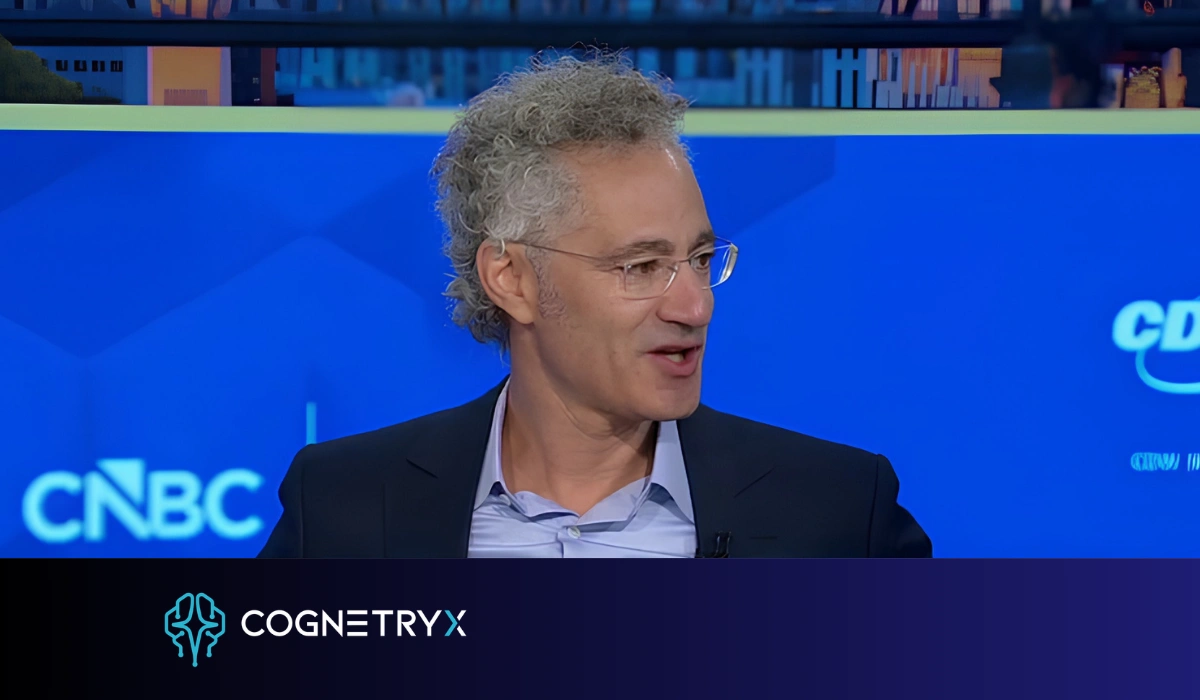
On July 1, 2026, Palantir CEO Alex Karp went on CNBC and called the way AI labs charge for their models a "wealth tax." Enterprises pay a fortune in tokens, he argued, get little back, and hand their proprietary data to the labs while they do it. The delivery got most of the coverage. The argument outlasts it, because it comes down to a question every regulated institution should be asking: do you own your AI, or rent it?
Renting a frontier model means you never hold the weights, you cannot inspect how it reached an answer, and the data you feed it may improve a vendor's product. Owning the model, run on your own infrastructure, keeps the weights, the data, and the audit trail inside your control. For low-stakes work, renting is fine. For regulated work, that difference is the whole game.
What did Alex Karp actually argue?
Karp told CNBC that renting AI by the token has become a "wealth tax," with enterprises "paying for tokens that create no value" while the labs collect their data and their edge. "Something has gone completely wrong," he said.
Stripped of the theatrics, the case was about ownership. Frontier labs rent you access to a model you never hold. You pay per token, and the bill climbs as your team uses it more. You cannot see the weights or how the model reasons. And the prompts and documents you send can be used to sharpen the vendor's product. His point, in plain terms: own the model, or the company selling you tokens owns the part of your business that runs on it.
Why "trust the model" and "trust the vendor" are the same ask
A frontier lab tells you its model is safe to rely on, and you take that on faith. Palantir's own pitch is that its platform is the interpretable, trustworthy alternative. Both are a vendor telling you the inside is fine. In classified or regulated work, that is exactly the thing you cannot accept on anyone's word, Karp included. So skip the contest over which vendor to trust and ask whether trust has to be the variable at all.
What you give up when you rent a frontier model
Renting is convenient, and for low-stakes work it is fine. In regulated work, four things you give up start to matter.
- The weights. You never hold the model, so you cannot inspect it, move it, or keep running it if the price or the terms change. This is what open-weight models are meant to solve.
- Interpretability. You cannot trace how a conclusion was reached, which is a problem when a wrong answer carries real consequences.
- Your data. Prompts and documents may be used to improve the vendor's model, and either way they leave the network you are responsible for protecting. That is the heart of whether it is safe to put company data in AI.
- Predictable cost. Per-token pricing climbs with adoption, and the vendor sets the rate. We broke the math down in Token Costs Explained and the Cost Savings comparison.
What ownership changes: interpretability becomes something you check
Owning the model, run inside your own network, changes the shape of the problem. You hold the weights. The data stays in your environment. Every query and the sources behind every answer are logged where you can read them.
Interpretability stops being a promise on a sales call and becomes a record you can audit after the fact. Trust stops being the variable, because now you can verify. This is what private AI and sovereign AI actually deliver. The win is a system you can open and check.
How to tell which one you are actually running
Ask three questions of your current setup. Do you hold the model weights, or does a vendor? Can you trace a given answer back to the documents it used? Does your bill stay flat as usage grows, or climb? If the honest answers are the vendor, no, and climb, you are renting. If they are you do, yes, and flat, you own it.
What it comes down to
Karp named a real problem and, like most people who name a problem on television, he was also selling his answer to it. That does not make the problem less real. So ask yourself one thing: how much of the stack are you comfortable renting from a company whose interests are not yours?
Since this piece ran, market data caught up with the argument: smaller models now handle two thirds of AI work. Renting versus owning also shows up in cost, in data exposure, and in governance. See the private AI platform overview, how AI governance works when the model runs in your environment, and what sovereign AI means for regulated industries.
See what owning the stack looks like
Book a short demo and watch a private model answer real questions inside your network, with the weights, the data, and the logs staying on your side.
Request a Demo